China Light Gauge Steel Villa Supplier
- Cammi House
- 2026-10-05
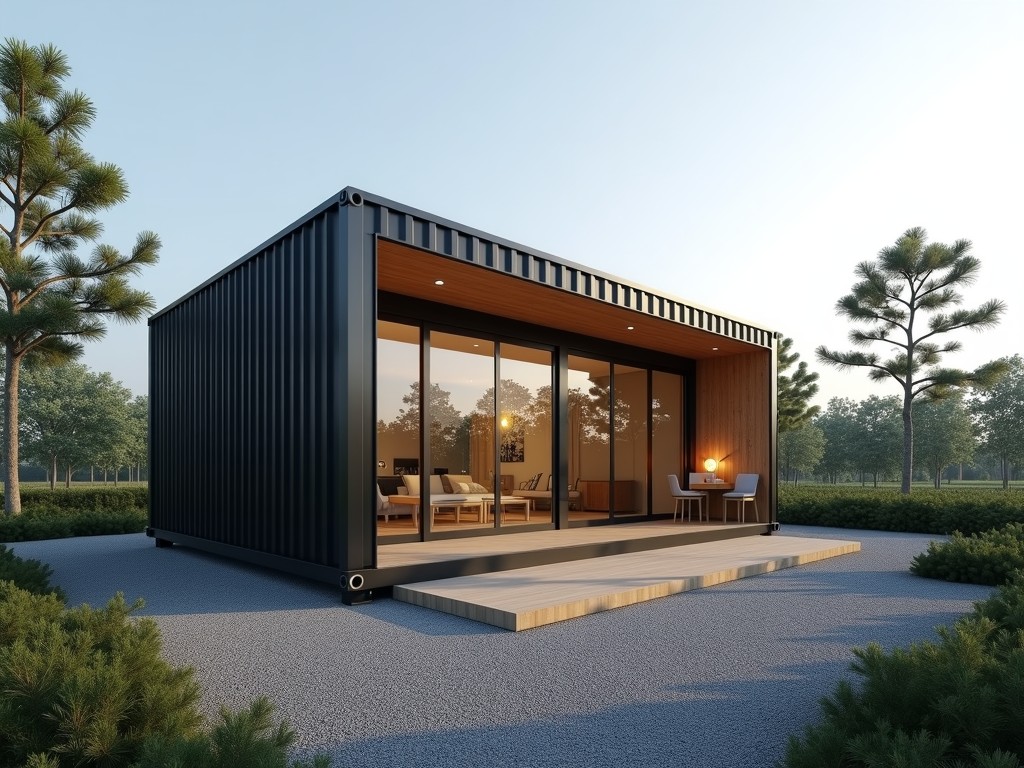
Light gauge steel villas are prefabricated building systems formed from cold‑rolled steel sections typically ranging from 0.8 mm to 2.5 mm thickness. The sections are coated with zinc or
Light Gauge Steel Villa Solutions from China Suppliers
Light gauge steel villas are prefabricated building systems formed from cold‑rolled steel sections typically ranging from 0.8 mm to 2.5 mm thickness. The sections are coated with zinc or zinc‑aluminum alloys to provide corrosion resistance, enabling service lives of 30 years or more in most climates. This structural approach allows rapid on‑site assembly while meeting residential load requirements.
Key Technical Characteristics
The steel grade commonly used is Q235B or equivalent, with a yield strength of approximately 235 MPa and tensile strength between 340‑470 MPa. Section dimensions are standardized to C‑shapes, U‑shapes, or Z‑shapes with flange widths from 50 mm to 150 mm and web heights from 80 mm to 250 mm. These dimensions provide the necessary moment of inertia for spanning typical room widths of 3‑5 m without intermediate supports.
Connection methods include self‑drilling screws, bolted plates, or proprietary clip systems, each designed to transfer shear and tensile forces while maintaining dimensional tolerance within ±0.5 mm. The coating weight is usually expressed as Z120 (120 g/m²) or higher, which corresponds to a zinc layer of about 17 µm per side.
Material Specification
Base steel is supplied as hot‑dipped galvanized coil, with optional zinc‑aluminum (Zn‑Al‑Mg) coating for enhanced durability in coastal environments. The coating thickness can be customized from Z80 to Z275 according to project‑specific corrosion exposure levels. All steel undergoes slit‑to‑width and roll‑forming processes that preserve the coating integrity, avoiding edge damage that could reduce protection.
Design and Engineering Considerations
Structural design follows the limit state method outlined in GB 50017‑2017 (Steel Structure Design Code) and incorporates factors for dead load, live load, snow load, wind pressure, and seismic action as applicable. The light gauge sections are analyzed for local buckling, torsional flexural buckling, and connection shear using finite‑element models or prescriptive tables provided by the manufacturer. Deflection limits are typically set to L/250 for live load and L/350 for total load to ensure serviceability.
To mitigate thermal bridging, the steel frame is often combined with insulating sheathing such as EPS, XPS, or mineral wool boards, achieving overall wall U‑values below 0.35 W/(m²·K) in typical configurations. The framing layout allows for continuous insulation layers without compromising structural integrity.
Manufacturing Process Overview
Production begins with decoiling the galvanized coil, followed by leveling to remove coil memory. The material then passes through a series of roll‑forming stations that shape the profile to the prescribed C, U, or Z geometry. After forming, the sections are cut to length using flying saws, punched for fastener holes, and optionally embossed for stiffening.
Inline quality checks monitor profile dimensions, hole positioning, and coating continuity. Finished bundles are stacked with protective corner guards and wrapped in stretch film to prevent moisture ingress during transit. The typical line speed ranges from 15 m/min to 30 m/min depending on profile complexity.
Quality Control and Testing
Dimensional tolerances are verified against the design drawing using laser measurement systems, with acceptable deviation limited to ±0.5 mm for hole centers and ±1.0 mm for overall length. Coating thickness is assessed by magnetic induction gauges at multiple points per bundle, ensuring compliance with the specified Z‑grade.
Mechanical properties are confirmed via coupon tensile tests taken from random samples, verifying yield strength within ±10 % of the nominal value. Visual inspection checks for scratches, coating delamination, or deformation that could affect performance. All test records are retained for traceability and can be supplied to the buyer upon request.
Typical Applications
- Low‑rise residential buildings – the high strength‑to‑weight ratio reduces foundation loads, allowing construction on sites with limited bearing capacity.
- Remote or disaster‑relief housing – components are lightweight, packable, and can be assembled with minimal skilled labor, shortening shelter delivery time.
- Tourist lodges and cabins – the steel frame permits large open‑plan interiors with fewer interior walls, supporting flexible architectural layouts.
- Industrial auxiliary offices – the system accommodates integrated services (electrical conduit, HVAC ducts) within the wall cavity, simplifying fit‑out.
Comparison Table: Standard vs. Custom Specifications
| Parameter | Standard Range | Customizable Options |
|---|---|---|
| Steel thickness (mm) | 0.8 – 2.0 | Up to 3.0 for higher load applications |
| Coating weight (Z) | Z120 | Z80 – Z275, Zn‑Al‑Mg coatings |
| Section depth (mm) | 80 – 200 | Up to 300 for special spans |
| Length tolerance (mm) | ±1.0 | ±0.5 available on request |
| Surface finish | Mill finish | Pre‑painted, embossed, or perforated |
Frequently Asked Questions
- Can dimensions be customized?
- Yes, section depth, flange width, thickness, and length can be adjusted according to project structural calculations. Custom tooling may be required for non‑standard profiles, which affects lead time.
- What information is required before quotation?
- To generate an accurate quote we need the intended building area, number of stories, design loads (live, snow, wind, seismic), preferred coating grade, and any architectural constraints such as openings for windows or doors.
- What materials are available?
- Base steel grades include Q235B, Q345B, and optional high‑strength steels. Coatings range from galvanized (Z80‑Z275) to zinc‑aluminum‑magnesium alloys for enhanced corrosion resistance.
- How is quality inspected?
- Inspection includes dimensional verification with laser gauges, coating thickness measurement, tensile testing of coupons, and visual checks for surface defects. Test reports are provided with each shipment.
- What packaging methods are available?
- Standard packaging uses stretch film and corner guards on pallets. For export, additional moisture‑barrier wraps, wooden crates, or steel frames can be supplied to protect against handling and climatic exposure.
- How are export shipments protected?
- Shipments are loaded into containers with desiccant packs, secured with straps, and marked with handling instructions. The packaging design meets ISPM‑15 standards for wooden components when used.
- What is the typical production lead time?
- Lead time varies with order size and customization. Standard profiles typically ship within 2‑3 weeks after receipt of deposit, while customized sections may require 4‑6 weeks.
- How are samples arranged?
- Sample sections (usually 300 mm length) can be sent via express courier at the buyer’s expense. Larger sample kits including connection hardware are available upon request for trial assembly.
Get in Touch
For technical inquiries, quotation requests, or to discuss project‑specific requirements, please contact our engineering team. We provide detailed CAD layouts, load tables, and installation guides to support your procurement process.
Visit our contact page to submit a request, or email us directly at [email protected]. We aim to respond within one business day.