China Light Steel Villa Material And Technology
- Cammi House
- 2026-10-05
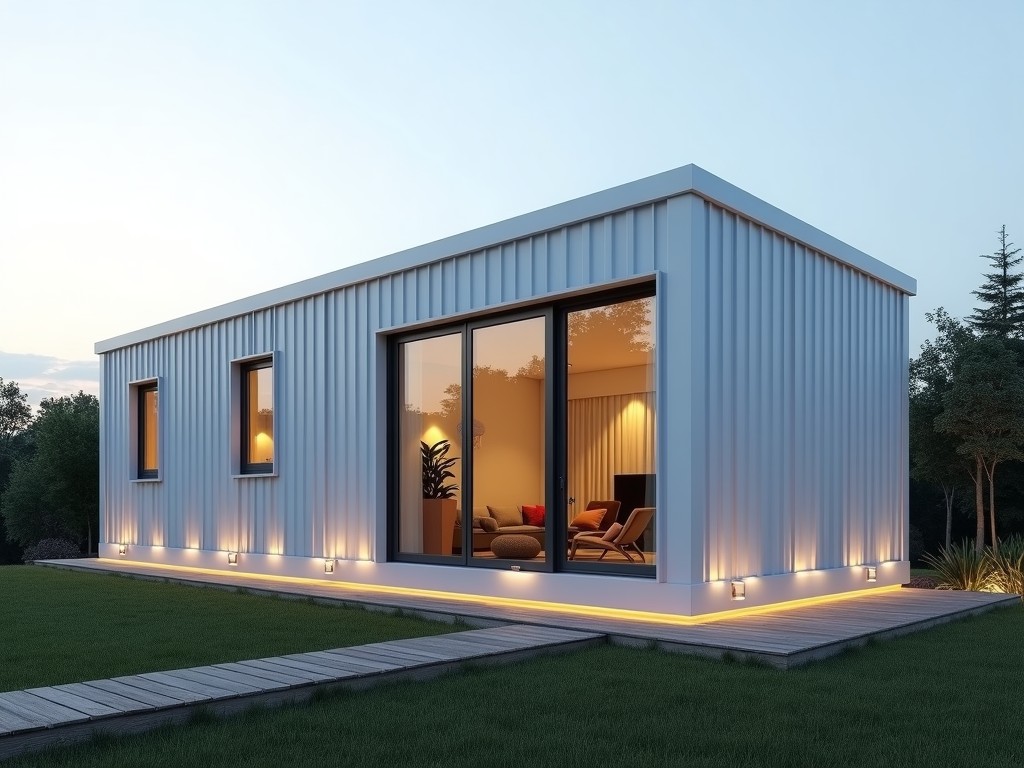
Light steel villas rely on cold‑formed steel sections that provide a high strength‑to‑weight ratio, enabling rapid assembly on site while meeting seismic and wind load requirements. The primary
China Light Steel Villa Material and Technology
Light steel villas rely on cold‑formed steel sections that provide a high strength‑to‑weight ratio, enabling rapid assembly on site while meeting seismic and wind load requirements.
Material Composition and Properties
The primary material is hot‑dip galvanized steel coil with a zinc coating weight typically ranging from 120 g/m² to 275 g/m², depending on corrosion exposure. The base steel grade is usually Q235B or Q345B, delivering a minimum yield strength of 235 MPa and tensile strength of 370‑500 MPa.
Additional alloying elements such as manganese and silicon are controlled to improve weldability and formability without compromising ductility. Elongation at fracture commonly exceeds 20 %, allowing the sections to absorb deformation during seismic events.
Typical Mechanical Characteristics
| Property | Typical Value | Unit |
|---|---|---|
| Yield Strength (Q235B) | ≥235 | MPa |
| Tensile Strength (Q235B) | 370‑500 | MPa |
| Elongation at Break | ≥20 | % |
| Zinc Coating Weight | 120‑275 | g/m² |
| Section Thickness (Cold‑formed) | 0.8‑2.5 | mm |
Manufacturing Process
Coils are slit to required width, then passed through a series of roll‑forming stations that produce C‑shaped, U‑shaped or Z‑shaped profiles. The forming temperature remains below the recrystallization point, preserving the steel’s mechanical properties.
After forming, sections are cut to length, punched for fastener holes, and optionally coated with a polyester or fluoropolymer paint system for enhanced UV resistance. All steps are performed under ISO 9001‑controlled conditions.
Structural Performance Characteristics
Light steel frames exhibit a high axial load capacity relative to their mass. A typical 100 mm C‑section with 1.5 mm thickness can sustain a compressive load of approximately 15 kN per stud when properly braced.
The moment of inertia for such a section is around 1.2 × 10⁶ mm⁴, providing sufficient flexural stiffness to resist wind pressures up to 1.5 kPa without excessive deflection.
Connections are typically made with self‑drilling screws or blind rivets; shear strength of a #8‑12 screw in 1.5 mm steel exceeds 2.2 kN, ensuring joint integrity under cyclic loading.
Applications in Light Steel Villa Construction
The material serves as the primary structural system for walls, floors and roof trusses. Its lightweight nature reduces foundation loads, allowing the use of shallow footings or screw piles in regions with poor soil bearing capacity.
Because the sections are factory‑cut to length, on‑site labor is limited to lifting and fastening, which shortens erection time to as little as two weeks for a 120 m² villa.
The non‑combustible steel core contributes to fire resistance; when combined with gypsum board cladding, wall assemblies can achieve a 1‑hour fire rating.
Customization Options
Section dimensions (height, flange width, thickness) can be adjusted to meet specific span and load requirements. Common wall stud sizes range from 75 mm × 40 mm × 0.8 mm to 150 mm × 50 mm × 2.0 mm.
Coating choices include standard galvanization, galvannealed for improved paint adhesion, or pre‑painted finishes in RAL colors. Perforation patterns for service conduits can be punched during roll‑forming.
Lengths are typically supplied in 6 m bundles but can be cut to custom lengths up to 12 m to reduce on‑site welding.
Quality Control and Testing
Incoming coil is inspected for coating weight using magnetic gauges and for base metal thickness with ultrasonic gauges. Dimensional tolerances of roll‑formed sections are held to ±0.5 mm for width and ±0.2 mm for thickness.
Mechanical samples are tensile tested per ASTM A370; results must meet the specified yield and tensile ranges. Corrosion resistance is verified by salt‑spray testing (ASTM B117) for a minimum of 500 hours without red rust.
Final bundles are marked with heat numbers, section size and coating class, enabling traceability from raw material to finished product.
Packaging, Shipping and Handling
Sections are bundled with steel straps and protected by corner guards to prevent deformation during transit. Bundles are typically placed on pallets and secured with stretch film.
For export, containers are loaded with a maximum gross weight of 24 tons per 20‑foot unit, and moisture‑absorbent desiccants are included to mitigate condensation.
Handling instructions recommend using lifting slings at the bundle’s center of gravity to avoid bending; manual handling of individual sections should employ gloves to prevent coating damage.
Frequently Asked Questions
- Can dimensions be customized? Yes, section height, flange width and thickness are adjustable per project specifications.
- What information is required before quotation? Required data include design loads, span lengths, coating preference and any perforation or cut‑length needs.
- What materials are available? Hot‑dip galvanized Q235B or Q345B steel, with optional galvannealed or pre‑painted finishes.
- How is quality inspected? Incoming coil coating, dimensional tolerances, tensile testing and salt‑spray tests are standard.
- What packaging methods are available? Strapped bundles with corner guards, palletized and stretch‑wrapped; custom crating upon request.
- How are export shipments protected? Desiccants, moisture‑barrier film and secure strapping inside containers.
- What is the typical production lead time? Usually 10‑15 working days after receipt of confirmed drawings, depending on order size.
- How are samples arranged? Sample sections (up to 1 m length) can be shipped via express courier at the recipient’s cost.
For technical datasheets, sample requests or project‑specific quotations, please contact our engineering team.
Submit Inquiry